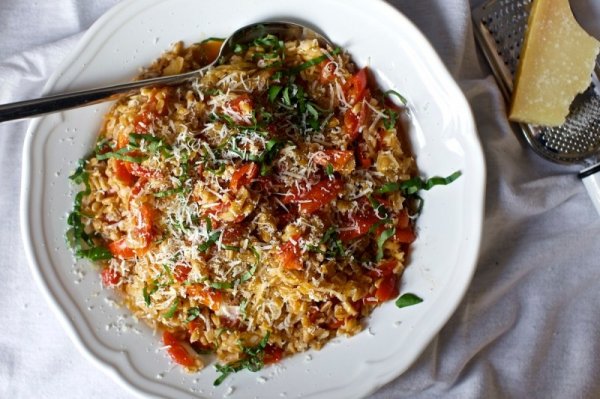
When a planned chicken dinner fell behind schedule on a recent weeknight, a home cook turned to a one-pan linguine technique from a magazine and adapted it to farro—a wheat grain known for its hearty chew. The result was so well-received that the dish made three appearances at the table within a single week, including one meal with roasted sausages and another topped with a poached egg.
The method is straightforward: combine two cups of water, one cup of semi-pearled farro, half a large white onion, two garlic cloves, nine ounces of grape or cherry tomatoes, 1¼ teaspoons of kosher salt, up to ¼ teaspoon of red pepper flakes, and a tablespoon of olive oil in a single saucepan. Bring everything to a boil, then simmer until the farro is tender and the liquid is mostly absorbed. The result is a grain that arrives from the pot already seasoned, with the tomatoes breaking down into a light sauce.
Why Farro Works for One-Pot Cooking
Unlike pasta, which can turn soft and gummy when cooked in minimal liquid, farro retains a distinct bite. That texture, combined with the slow absorption of the seasoned cooking liquid, gives the grain a depth that plain water cooking rarely achieves. The dish also fits a common weeknight constraint: minimal prep and minimal cleanup.
The recipe calls for semi-pearled farro, which cooks faster than whole farro but still holds its shape. For those using other types, cooking times will vary. The original author notes that the dish serves two as a hearty main or four as a side, and total time is about one hour.
One of the appeals is the ingredient list, which relies on pantry staples: an onion, garlic, tomatoes, olive oil, and basil. The author points out that these are often on hand, making the dish a fallback when meal planning falls through. The original version was inspired by a one-pan linguine recipe from Martha Stewart Living, but the farro adaptation proved more satisfying due to its firmer texture.
In practice, the dish has proven versatile. Served as a main with a poached egg, it becomes a complete meal. Paired with roasted sausages, it stretches further. The author also suggests a light drizzle of olive oil and a scatter of basil and parmesan before serving.
For those who prefer a less saucy result, a slotted spoon can be used to leave excess cooking liquid behind. The recipe is forgiving, and leftovers can be reheated the next day—something the author tested with a second and third batch.
While the original article is a personal narrative, the technique itself is a useful addition to any weeknight repertoire. It requires little forethought, uses common ingredients, and delivers a grain dish that stands on its own or pairs with a protein. For cooks who have yet to try farro, this one-pot approach offers a low-friction entry point.








Comments
Sign in to leave a comment
No account? Create one
No comments yet.