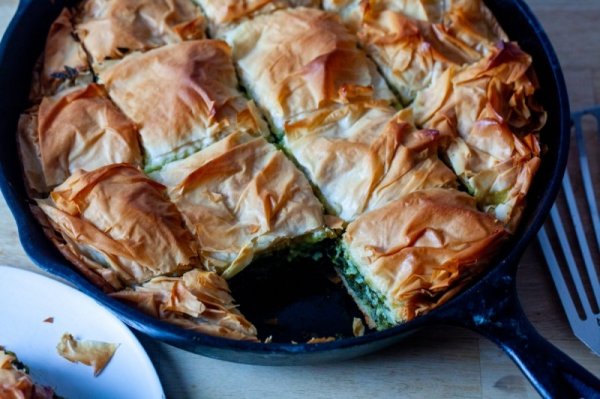
For years, the mere thought of working with phyllo dough sent many home cooks into a panic, with its paper-thin sheets that crack and dry at the slightest hesitation. But a new approach, championed by a food blogger on TikTok, is turning that anxiety into triumph, yielding a spanakopita that's both rustic and remarkably crisp.
The method, which has been making the rounds on social media, comes from Julie, the creator behind the account Eat Like Greek With Julie. Her video, which demonstrates a more forgiving technique, caught the attention of Deb Perelman, the author of the popular Smitten Kitchen blog. Perelman, who had long avoided making traditional spanakopita due to phyllo-related stress, decided to give it a try after seeing Julie's video. She reports that the result was the best spanakopita she has ever made or tasted.
The key difference, Perelman explains, is a departure from the meticulous, one-sheet-at-a-time brushing that typically defines phyllo work. Instead, the recipe calls for a 12-inch cast-iron skillet, where sheets of phyllo are draped, drizzled with olive oil, and then scrunched or rumpled to create layers. This relaxed approach not only cuts down on prep time but also produces a texture that is exceptionally flaky and crispy.
Why the Skillet Method Works
Perelman notes that the technique eliminates the need for precise layering and butter brushing. By using olive oil and allowing the phyllo to overlap in a more casual manner, the pastry bakes into a golden, shatteringly crisp crust. The filling, a classic combination of spinach, feta, scallions, dill, and mint, is seasoned generously and bound with a single egg. The entire dish bakes for 45 to 60 minutes, until the top is deeply browned and crispy.
The recipe is designed for a 12-inch cast-iron skillet, but a 12-inch cake pan or a 9x13-inch baking dish works as well. Perelman emphasizes the importance of being generous with olive oil throughout the process, estimating that she uses about half a cup, sometimes more, for the best flavor and texture.
For those who have been intimidated by phyllo, this method offers a low-stress entry point. The dough is used straight from the package, unrolled and ready, with no need for a damp cloth to keep it from drying out, since the process is quick. The result is a spanakopita that serves 12 to 16 people, making it a perfect dish for a family dinner or a gathering with friends.
Leftovers can be stored in the refrigerator for up to a week and reheated in a 350-degree oven until the pastry is crisp again, about 15 to 20 minutes. The recipe also freezes well, offering a convenient make-ahead option.
Perelman's experience is a testament to the power of social media in demystifying complex cooking techniques. By sharing her success, she hopes to encourage other home cooks to attempt this classic Greek dish without fear. As she puts it, the spanakopita she made was "more doable than I thought possible," a sentiment that many will likely share after trying this method.


Comments
Sign in to leave a comment
No account? Create one
No comments yet.