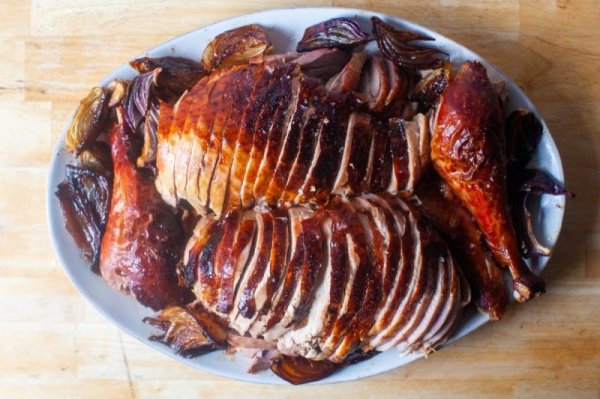
After more than a decade of avoiding the Thanksgiving turkey, a food writer has finally embraced the bird—and she’s sharing a method that cuts through the complexity. The recipe, developed over several years of hosting Friendsgiving dinners, relies on a dry brine and a six-ingredient glaze, a departure from the wet-brine soaks that many cooks swear by but dread.
The writer, who runs a popular cooking site, admits she long resisted adding a turkey recipe to her archive. Her reasons were practical: she rarely hosted, the internet was already saturated with 200,000 roast turkey guides, and turkey wasn’t her favorite poultry. But after taking over hosting duties for gatherings of 18 to 25 people, she found herself needing a reliable way to keep a large bird moist through hours of roasting. Wet brining, she says, produced delicious results but was a logistical nightmare. Dry brining, by contrast, proved simpler and just as effective.
The method involves salting the bird and letting it rest for one to two days, then roasting it at a high temperature before lowering the heat. The recipe calls for a 12- to 16-pound turkey, kosher salt, butter, maple syrup, a chile paste like gochujang or harissa, and a few onions. The onions, quartered and placed under the turkey, absorb the buttery drippings and become deeply caramelized, a side dish the writer describes as “otherworldly.”
She also credits an accidental experiment for the glaze. While testing a slow-roasted chicken earlier this year, she brushed the skin with a mixture of butter, maple syrup, and gochujang. The result was so good that she felt the chicken was “wishing it was a turkey.” The same glaze, applied to the turkey after brining, gives the skin a burnished, salty-sweet-spicy finish.
The recipe is designed for minimal fuss. There’s no mise-en-place, no lengthy ingredient list, and no need to rinse the salt off the bird. The writer’s only nod to tradition is a warning: don’t put anything but onions under the turkey, because they’re the real payoff. She also advises using a rimmed sheet pan under the cutting board when carving, to catch the juices for gravy.
Why the Dry Brine Works
Dry brining, which involves rubbing salt directly onto the skin and letting it sit, draws out moisture and then reabsorbs it, seasoning the meat throughout. Unlike wet brining, it doesn’t require a large container or a fridge full of liquid. The writer notes that a 14- to 16-pound bird takes about 2 to 2.5 hours to roast, while a 19.5-pound bird once took over 3 hours. She cautions that opening the oven frequently to check on side dishes can add up to 30 minutes to the cooking time.
The recipe includes a few practical tips: truss the legs with kitchen twine, tuck the wings under the bird (though she admits she’s never mastered that step), and cover the turkey with foil if it browns too quickly. The bird is done when a thermometer in the thickest part of the breast reads 150 to 155°F; it will carry over to 165°F during resting.
Carving and Serving
After roasting, the turkey should rest for 15 to 20 minutes before carving. The writer recommends watching a video tutorial if you’re unsure about carving technique, and she stresses using a sharp knife for clean slices. She also suggests pouring the collected juices over the sliced meat and adding a final sprinkle of salt and pepper.
The recipe serves 12 to 16 people and takes about 4 to 5 hours from fridge to table, plus the one to two days of dry brining. For those who’ve been intimidated by turkey, the writer’s approach offers a straightforward path to a juicy, flavorful centerpiece—without the usual stress.


Comments
Sign in to leave a comment
No account? Create one
No comments yet.