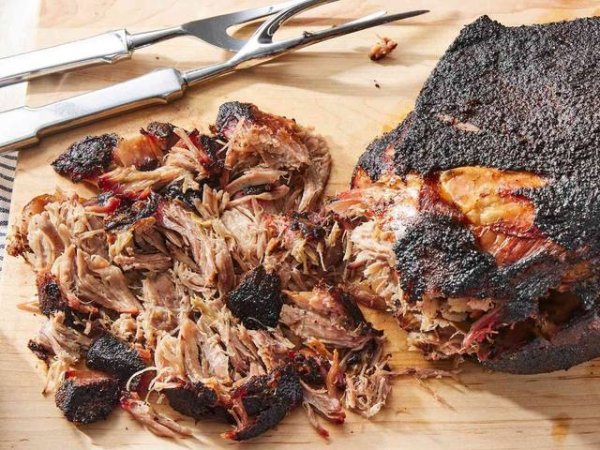
A recipe for smoked pork shoulder promises tender, flavorful pulled meat through a two-step process: an overnight soak in a sweetened cider brine, followed by a slow, smoky cook. The method, detailed for home cooks, yields roughly 20 servings and requires a total time of about 20 hours and 40 minutes, including preparation and resting.
The process begins with an 8-pound pork shoulder roast placed in a large pot and covered with apple cider. A dry rub is prepared separately, combining 5 tablespoons of white sugar, 5 tablespoons of light brown sugar, 2 tablespoons of kosher salt, 2 tablespoons of paprika, 1 tablespoon of onion powder, 1 tablespoon of freshly ground black pepper, and 1 tablespoon of garlic powder. A quarter cup of this rub is stirred into the cider, and the remaining rub is set aside for later use. The pot is then covered and refrigerated for 12 hours.
Smoking Setup and Brine Reuse
After the brining period, the smoker is preheated to 210 degrees Fahrenheit (99 degrees Celsius). Hickory chips, about 3 cups, are soaked in water and added to the smoker. The cider brine is poured into the smoker's water pan, along with a chopped onion and an additional quarter cup of the sugar rub. This step infuses the cooking environment with additional flavor and moisture.
The remaining sugar rub is spread over the pork shoulder before it is placed in the center of the smoker. The meat is then smoked until it becomes very tender, reaching an internal temperature of 200 degrees Fahrenheit (95 degrees Celsius), which takes approximately 8 hours. During this time, the hickory chips and liquid levels must be monitored, adding more as needed to maintain consistent smoke and moisture.
Resting and Shredding
Once the pork reaches the target temperature, it is transferred to a large platter and allowed to rest for 30 minutes. This resting period is crucial for the juices to redistribute, making the meat easier to shred with forks. The resulting pulled pork can be served immediately or used in various dishes.
For those mindful of nutrition, each serving contains approximately 442 calories, 32 grams of fat, 15 grams of carbohydrates, and 24 grams of protein. This recipe is designed for those willing to invest time in a slow-cooking process that emphasizes flavor development through brining and smoking.

Comments
Sign in to leave a comment
No account? Create one
No comments yet.