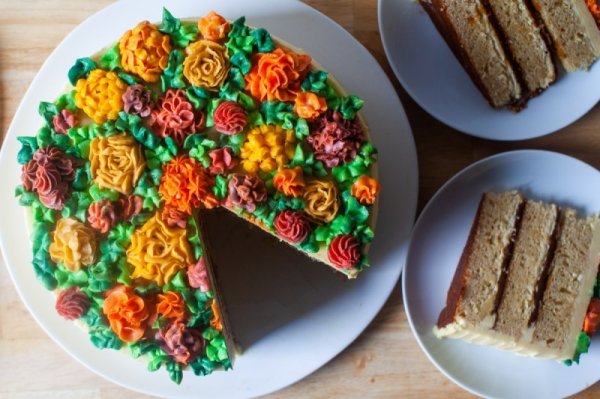
Making a wedding cake at home is less about baking skill and more about logistics, according to a veteran home baker who has made three wedding cakes for friends—in 2008, 2018, and again a couple of weeks ago. In a detailed account, she explains that while baking a delicious cake for loved ones is doable, feeding an entire wedding reception from a home kitchen is a different challenge. Once guest counts exceed 80, a 14-inch tier may be needed—larger than many small city ovens can fit. Each layer of a 12-inch cake can fill a 5-quart stand mixer bowl, requiring separate batches.

She describes mishaps that would be minor in a bakery but derailing at home: curdling a dozen-egg custard on her second cake, discovering her 12-inch tier shrank to about 10 inches and fell short on servings, and dealing with broken ovens and mixers. Despite the stress, she lists reasons to proceed: the delight on guests' faces, the fun of the project, and the satisfaction of doing it once.
Planning sizes, flavors, and test cakes
Before baking, she advises determining guest count and whether the couple wants a top tier for their anniversary. She distinguishes "party cut" (2-inch by 2-inch slices) from "wedding cut" (1-inch by 2-inch slices), noting that taller wedding tiers yield more servings. She recommends printing a cutting guide for whoever cuts the cake and planning for 20 extra slices to account for dowels and seconds. She also stresses verifying that the oven can fit the pan size—a 16-inch cake won't fit most home kitchens.
Flavors should reflect the couple's preferences. She made a half chocolate with chocolate filling and half vanilla with mango curd for her first cake, a German chocolate cake for the second, and salted caramel, brown butter, and vanilla for the third. She insists on making a full test cake, scaled down to 6 inches, to check height, shrinkage, and flavor before scaling up.


For scaling, she uses pan base area rather than batter volume: a 6-inch round has about 28 square inches, a 9-inch has 64, and a 12-inch has 113. She doubles batter from 6-inch to 9-inch and again to 12-inch, accepting odd numbers like 1.33 eggs and adjusting as needed.
Scheduling and materials
She schedules backward from delivery, noting that cake layers freeze well for 1 to 2 weeks, salted caramel filling keeps for two weeks in the fridge, and custard base for frosting lasts 4 days. She builds in extra days and prefers to finish at least half a day before delivery. She advises buying a transport box sized to the cake board, a drum, extra cake circles, dowels, and tools like a serrated knife, whisk, parchment rounds, and a revolving stand. Ingredients can be bought in bulk; she notes that a 5-pound bag of flour contains about 17 cups, a 4-pound bag of sugar about 9 cups, and a pound of butter is 2 cups.


For her third cake, she used three types of butter: basic browned butter for cake layers, European-style salted butter for caramel, and European-style butter for frosting. She also bought vanilla bean paste and milk powder to amplify brown butter flavor.
The cake: brown butter vanilla, salted caramel, German buttercream
She describes the cake as one of her favorites. Each tier is three layers of tender vanilla cake made with brown butter, amplified with powdered milk (1 tablespoon per 1/2 cup butter). She reverse-creams the batter on advice from Erin Clarkson of Cloudy Kitchen, which yields flatter tops and a plush crumb. She bakes at 325°F instead of 350°F for less shrinkage.


The filling is a salted butter caramel cooked to 245°F, spreadable at room temperature. To prevent soaking, she coats each cake layer with a thin layer of frosting and pipes a frosting dam around the edge before adding caramel. She sprinkles sea salt flakes on top.
The frosting is German buttercream—a vanilla bean custard with butter whipped in. She adapted Clarkson's technique and Stella Parks' recipe on Serious Eats, using more vanilla bean paste and vanilla extract. She notes it's not too sweet, holds shape, and keeps well.
For assembly, she deconstructed the cake, placing each tier on a separate stand, and let a florist decorate with fresh flowers. She provides a recipe for a 9-inch celebration cake and instructions to convert it to wedding tiers: multiply cake ingredients by 1.5 for a 4.5-inch-tall 9-inch tier; halve that for a 6-inch tier and double it for a 12-inch tier. Frosting and caramel amounts remain the same.
She includes full recipes for the cake layers, salted caramel filling, and vanilla bean custard frosting, with detailed directions. Total time is about 2 hours plus cooling, serving 12 to 16 for the celebration cake.



Editorial Notes