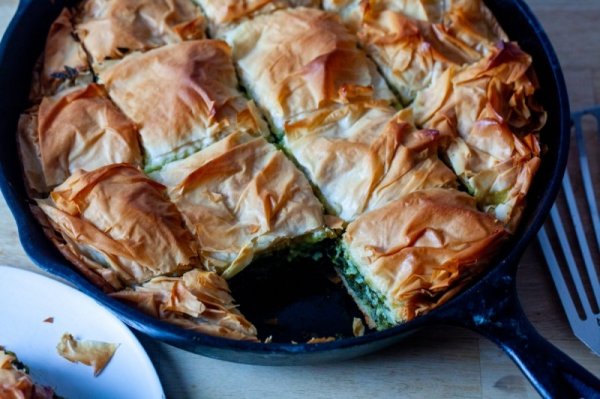
A home cook who spent years avoiding spanakopita because handling phyllo dough felt too stressful says a TikTok video finally showed her a workable method. The video, from Eat Like Greek With Julie, prompted her to make the Greek spinach and feta pie in a 12-inch cast-iron skillet. The result, she writes, was the best spanakopita she has ever eaten or made.
The cook had previously tried triangles, spirals, galettes, and loosely assembled skillet versions to limit her exposure to phyllo, the tissue-thin dough used in Middle Eastern and Balkan pastries. Each attempt was good, she says, but none matched the exact spanakopita she craved. What changed was not the filling but the assembly: the new method uses scrunched and rumpled phyllo sheets rather than flat, buttered layers, and relies on generous olive oil throughout.

What the Skillet Method Changes
According to the recipe, four to six phyllo sheets are draped around a generously oiled 12-inch cast-iron skillet, with the excess hanging over the sides. Two to three sheets are then rumpled to cover the bottom, followed by half the spinach mixture. More scrunched sheets go on top, then the remaining filling. The overhanging phyllo is folded over the filling, and the top is finished with additional rumpled sheets and more olive oil. The pie is cut into squares before baking for 45 to 60 minutes, until the top is very crispy and browned.
The filling combines 1 1/4 pounds of baby spinach, chopped; 1 cup finely chopped red onion; 6 to 8 sliced scallions; 2 minced garlic cloves; 1/3 cup each of chopped fresh dill and mint; 1/2 cup chopped parsley; 3/4 pound crumbled feta; and 1 large egg, seasoned with kosher salt and black pepper. A 1-pound package of defrosted phyllo is used. The cook estimates she uses about 1/2 cup of olive oil total, possibly more.
Leftovers keep for a week in the refrigerator and can be frozen. To reheat, the pie goes uncovered into a 350-degree oven for 15 to 20 minutes until warmed through and crisp again. Prep takes 30 to 45 minutes, and the dish serves 12 to 16.







Editorial Notes